French scientists and mathematicians have shaped the way we understand the world, whether it’s why milk doesn’t go off too quickly or how probability works when you’re feeling lucky.
From groundbreaking discoveries to the occasional eyebrow-raising controversy, these figures weren’t just brainy: they were human too. Some were overachievers, some procrastinated even to get off from bed.
Either way, their stories are as fascinating as their work.

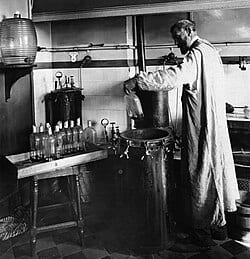
We all have to thank Louis Pasteur for keeping our beer and milk away from spoiling.
But this technique, known as “pasteurization” (yep, his name’s in it), was not the only thing invented by this French chemist and microbiologist.
Many believe him to be the “Father of microbiology”, for he was one of the most important founders of medical microbiology. Here are a few of his scientific accomplishments:
He pioneered the study of molecular asymmetry, discovered that microorganisms cause fermentation and disease, discovered the “Pasteur Effect” that describes the phenomenon where the presence of oxygen inhibits glycolysis…
He also saved the beer, wine, and silk industries in France, and developed vaccines against anthrax and rabies. Hopefully those ones are a bit easier for you to wrap your head around.
These accomplishments together earned him France’s highest decoration, the Legion of Honour, as well as election to the Académie des Sciences. Today there are some 30 institutes and an impressive number of hospitals, schools, buildings, and streets that bear his name.
You would probably be surprised if I told you Louis Pasteur was merely an average student in his early years. He was not found to be any
more talented than his classmates in sciences or mathematics, but he was indeed gifted in drawing and painting.
In 1843, after graduating first with a bachelor of arts degree and then a bachelor of science degree, Pasteur was admitted to the École Normale Supérieure (a teachers’ college in Paris), where he attended lectures by French chemist Jean-Baptiste-André Dumas and became Dumas’s teaching assistant. Two years later, he obtained his master of science degree and, ultimately a doctorate in sciences in 1847.
He worked as a physics teacher in a high school, but shortly thereafter accepted a position as professor of chemistry at the University of Strasbourg.
How Pasteur saved France’s silk industry was a story that came after his election to the Académie des Sciences in 1862. In the middle of the 19th century, a mysterious disease had attacked French silkworm nurseries, and silkworm eggs could no longer be produced in the country. By 1865, the silkworm industry was almost completely ruined in France.
Pasteur, meanwhile, knew virtually nothing about silkworms, as he had been experimenting with microbiology instead of fabric.
However, upon the request of his former mentor Dumas, Pasteur decided to look into the problem, thinking it would give him an opportunity to learn more about infectious diseases. After five years of research, Pasteur became an expert silkworm breeder and succeeded in saving the silk industry through a method that enabled the preservation of healthy silkworms and prevented their contamination by the disease-causing organisms. Today, this method is still used in silk-producing countries around the world.
In 1867, Pasteur was appointed professor of chemistry at La Sorbonne. Although he was partially paralyzed by that time, he continued his research.
But Louis Pasteur’s life, especially his scientific career, is not without controversy. First, he was caught lying in saying that a successful vaccine against anthrax was made using his techniques. It was later found out that the technique used in that successful trial belonged to one of his colleagues.
While he claimed publicly that he had completed trials on rabies dogs, he was also found administering his rabies vaccine on people with no evidence of those trials. As a result, his rabies vaccines were said to have directly killed a little girl, who died just a few days later after receiving the injection.
His series of alleged scientific misconduct was indeed problematic, careless and unethical, but we obviously cannot deny his contributions to the scientific world.
So, I guess, how we see Louis Pasteur is a question for each one of us to decide for ourselves.
French vocabulary:
Blaise Pascal was a French mathematician, physicist, religious philosopher, and master of prose. You can tell that he was definitely a bit of an overachiever, really, and that’s probably why he was described by others as “a perfectionist” who was “stubbornly persevering”.
He laid the foundation for the modern theory of probabilities, formulated what came to be known as Pascal’s principle of pressure, and also propagated a religious doctrine that taught the experience of God through the heart rather than through reason.
He even invented the first digital calculator in the world to help his father, who worked in the tax industry.
From about 1646, Pascal began a series of experiments on atmospheric pressure, from which he was able to prove the existence of a vacuum. However, when Descartes visited him, he argued with Pascal, as he was not convinced at all about the existence of the vacuum. He even wrote a letter after this visit that Pascal “has too much vacuum in his head”. Ouch!

But a dismissive friend did not dissuade Pascal from working intensely on scientific and mathematical problems, despite his health problems,
which made him rather fragile from a young age.
What was even worse was the fact that he nearly lost his life in an accident in the fall of 1654. The horses pulling his carriage bolted,
leaving it hanging over a bridge above the River Seine. Lucky for Pascal, he was rescued without any physical injury, and it was
soon after this accident that he pledged his life to Christianity.
Pascal ultimately died at a rather young age of 39 from a malignant growth in his stomach. From a very rough overview of his life, we see an adventurer who never stopped solving the unknown variables and challenging accepted truths.
He was, indeed, a stubbornly persevering perfectionist.
Hopefully everyone knows that water also goes by a nickname, “H2O”. If not, well, now you do.
But before H and O were even known to exist, it was believed, according to Aristotle, that there were only four elements that construct our physical world: earth, air, fire, and water.
Oxygen and hydrogen were not common knowledge that every Year 5 kid would know. At least, not until they were discovered by a Frenchman named Antoine Lavoisier.
Lavoisier never formally studied Science.
Born in 1743 in Paris, he grew up in a wealthy family with a lawyer father who worked in the Parliament. Although he was very interested in studying Science, he chose to follow in his father’s footsteps and enrolled himself in law school at La Sorbonne.
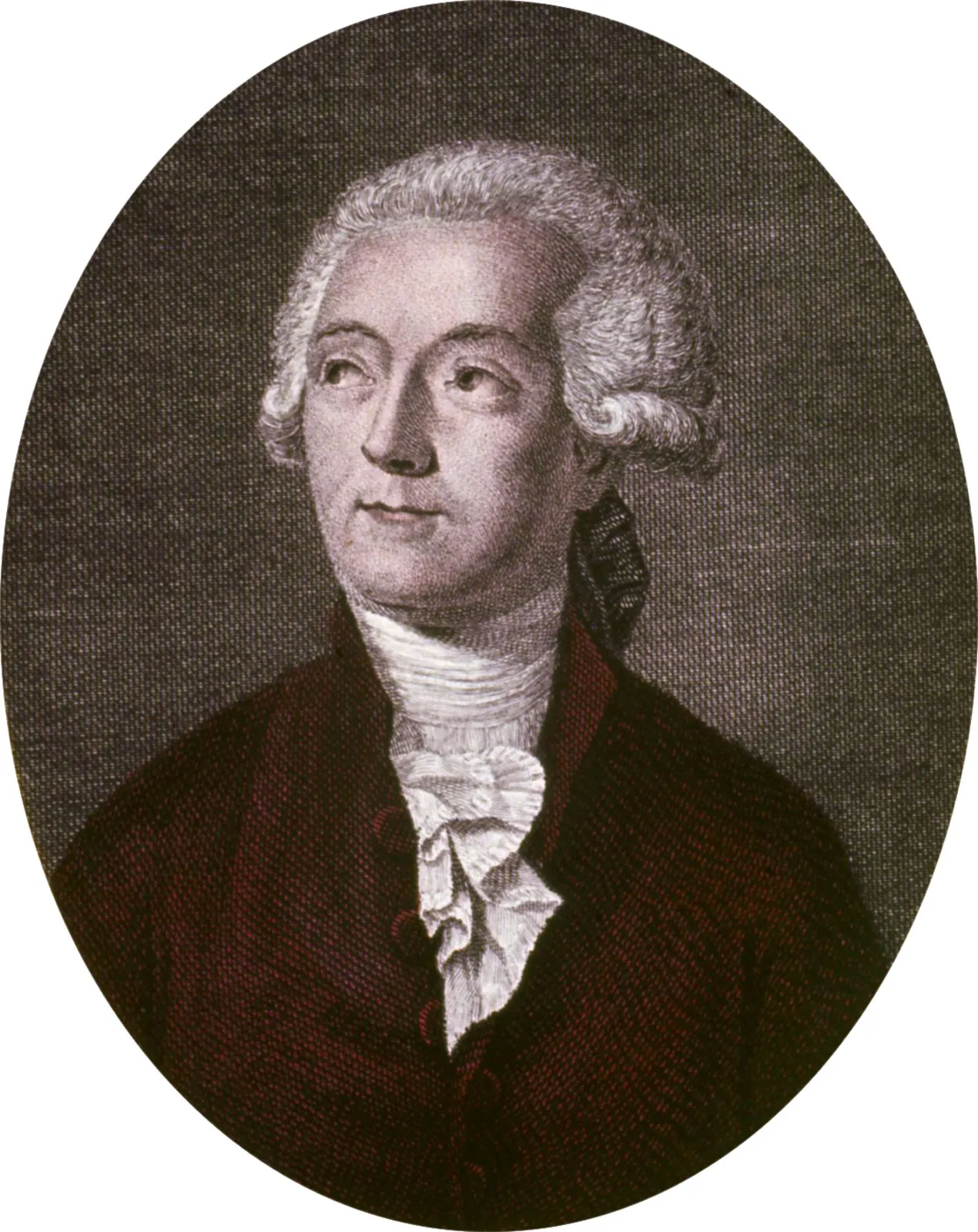
You could probably call him a genius: after only two years of university study, Lavoisier completed his law degree at just 20 years old. Meanwhile, during those same two years, he also spent his spare time attending science lectures and working on his own scientific research.
He probably wouldn’t be a big fan of weekends, since he couldn’t even be bothered to give himself a day off.
In the same year that he earned his legal license, Lavoisier also published his own scientific paper, which earned him membership into the Académie des Sciences five years later. By that time, he was only 26.
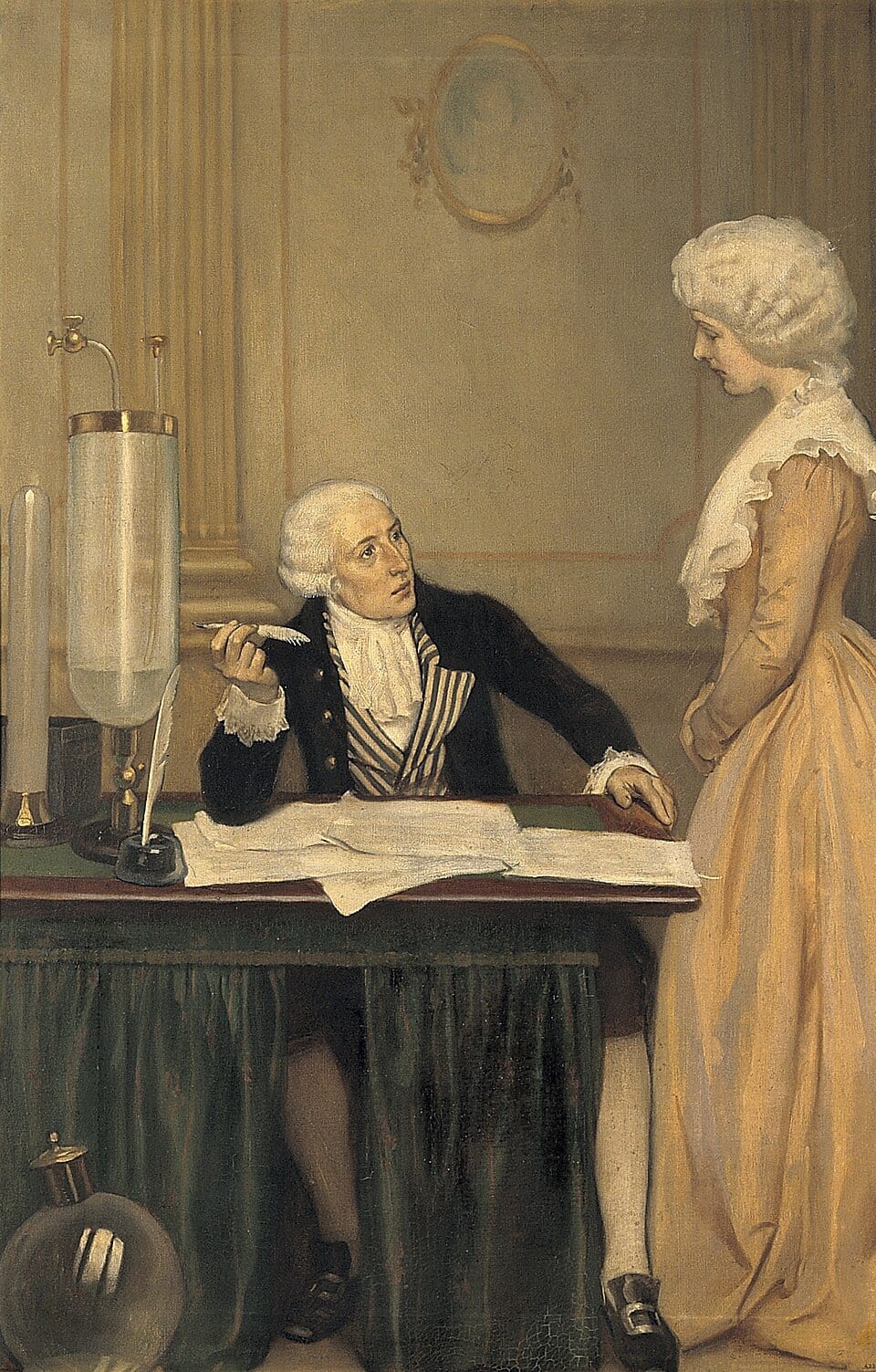
In his lifetime, Lavoisier conducted two very famous experiments.
In 1772, he put a diamond in a glass jar and focused sunlight on it using a large magnifying glass. He found that, although the diamond
ended up burning away to nothing, the weight of the jar remained unchanged. This finding helped him realise the law of conservation
of mass,
one of the most foundational concepts in modern physics.
Moreover, his experiments on combustion also led to the identification of three important elements: oxygen, hydrogen, and sulfur, which are now essential players in the periodic table.
Despite his scientific contributions, Lavoisier’s end was tragic. If his life was a show, it certainly wouldn’t be something like Emily in Paris. While Emily almost always manages to survive through life crisis, Lavoisier did not get his happy ending.
When the French Revolution began in 1789, Lavoisier continued advising the government on financial matters. Even when the Revolution became increasingly radical, he did not flee and continued to argue that the Académie des Sciences should be saved because its members were loyal and indispensable servants of the state. Eventually, as you could imagine, he was imprisoned. In 1794, Lavoisier, along with his father-in-law and 26 other tax farmers, were guillotined.
Ironically, he was declared innocent the following year.
Perhaps they were just a bit too in a rush to cut down one of the sharpest minds around.
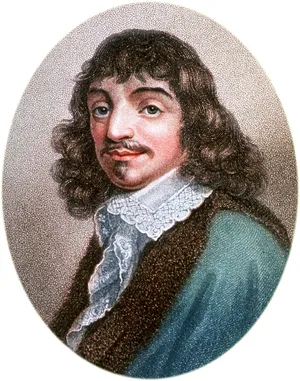
Needless to say how nasty Descartes could be, especially that one time when he talked behind Blaise Pascal’s back, saying that Pascal “has too much vacuum in his head”.
And we all know that he wasn’t nice to animals either, calling them mindless machines incapable of reason or even feeling pain.
As you could imagine, Descartes was not much of a “people’s favourite”, even in his own time.
Yes, he created analytic geometry, bridging the gap between algebra and geometry.
And yes, he founded so many more important mathematical concepts that contributed to the development of modern mathematics, including ideas that led to calculus.
And, also yes, he proposed an early, foundational version of the laws of motion that predated and influenced Newton’s first two laws in
Physics.
Yet, in 17th century England and the Netherlands, Descartes was also publicly and repeatedly accused of being a fraud and of
lying to his readers so as to manipulate them into becoming his disciples. He was heavily criticised by both his contemporaries and
subsequent philosophers.
While being a big sleeper who would only get up at 11 every morning, Descartes was also fascinated by the idea of living longer than other
people. Born a weak child who was not expected to survive, he became very health-conscious and even adopted a vegetarian diet. He once
bragged that he had not been sick for 19 years and that he expected to live to 100.
In his later years, he hoped to learn how to prolong human life to a century or more. However, he eventually gave up on that ambitious goal, realising that such an achievement would require generations of work. At the end, despite facing criticism and plenty of intellectual battles (Descartes enjoyed them) throughout his life, Descartes decided to embrace life as it came. Fair enough.

French vocabulary:
The history of French’s scientists and mathematicians isn’t just about discoveries. It’s also about people, flaws and all. From brilliance to controversy, these figures remind us that progress is rarely neat or simple.
In the end, they’ve all left a mark. And what better way to live than to be remembered by the world?