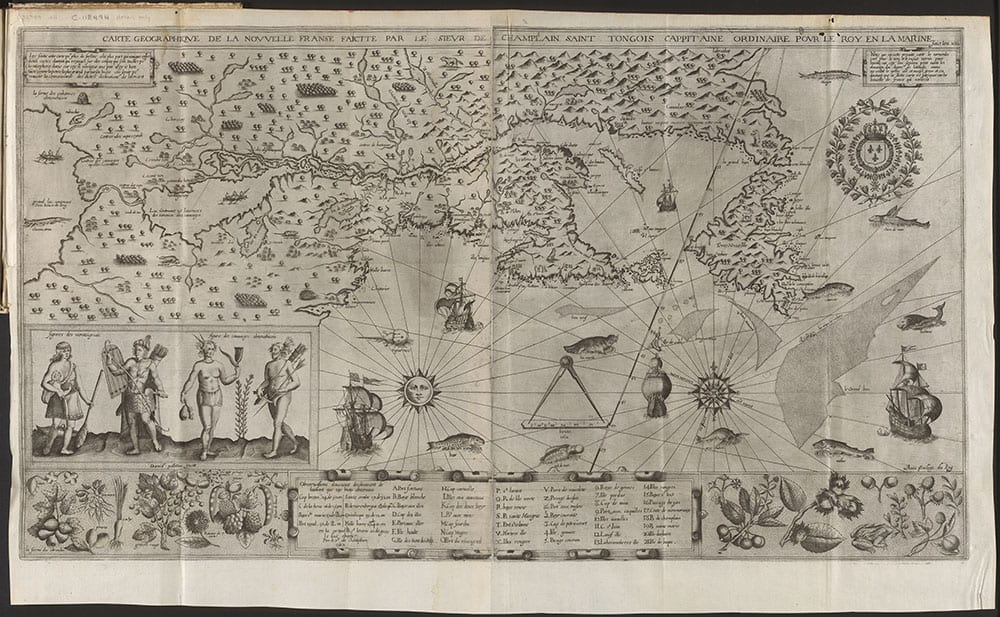
What’s trendy on TikTok now?
I’m sure you’ve already seen the viral Taylor Swift and Charli XCX video, in which the two extremely successful singers performing the nostalgic yet catchy song Boom Clap in 2014. Who would’ve thought that the two best friends would today turn into enemies who allegedly attack each other with a sharp pen?
But long before Twitter debates, podcast hot takes, or the battles with ambiguous yet sarcastic lyrics, French writers and philosophers had already mastered the art of dramatic intellectual conflict. They argued, they fought, they were rebellious, and at the same time, controversial.
The stories from centuries ago might be a little spicier as you would’ve imagined. If you’re ready for the tea, read on!

Why does the name “François-Marie Arouet” sound so familiar and yet so strange?
For most people, this name probably doesn’t even ring a bell, especially if you’re not a literature and philosophy nerd. And that’s perfectly fine, because the owner of this name certainly did not want you to figure out who he was.
Having used something like 175 different pseudonyms throughout his career, staying a little mysterious was clearly part of the brand. Still, this enigmatic Parisien is regarded today as one of the greatest French writers and philosophers, centuries after his death.
Perhaps you are familiar with his many “titles”: a rebel against family authority, a fearless crusader against tyranny, bigotry, and cruelty, a “troublemaker” who managed to be imprisoned twice and even exiled from France after mocking the Regent’s family and criticising government institutions……
Perhaps you are familiar with his philosophical idea that liberty of expression is essential to social progress, along with his bold and wickedly witty critiques of religious and governmental institutions.
Or, perhaps you know him by one of his most well-known pseudonyms: Voltaire.
“Who was Voltaire” remains a question to which the world seeks an answer. Nearly everything about his life, from his birth date to his family history, was depicted by him as a secret open to many possibilities of hypothesis.
Born in 1694 into a middle-class bourgeois family in Paris, Voltaire’s exact birth date remains a mystery. On several occasions he casually offered dates that didn’t even match the one on his birth certificate.
While he showed little affection for his punitive father, who was a receiver in the Cour des Comptes, Voltaire also liked to claim that he was actually the son of an officer and songwriter. Whether this was family drama, self-mythology, or simply boredom with the truth remains unclear.
Then again, anyone familiar with Voltaire knows better than to take his words too seriously, for he had even declared, in a letter of 1767, that while Jean-Jacques Rousseau, another French writer, “writes for writing’s sake”, “I write to act.”
This peculiar passion for combining the arts of literature and theatre evolved into the ironic, fast-moving, and often deceptive style that defines his work, which covers an immense range of genres.
All his life, Voltaire enjoyed practicing role-playing, even in his own writings, which are characterised by a proliferation of different personae and voices. Readers are frequently tricked by footnotes that contradict the text, or by one voice arguing with another.
He spent considerable effort making the “real” Voltaire impossible to pin down, and, so, as he wished, the question “Who was Voltaire?” could not be answered in his own time, and it remains just as elusive today.
French vocabulary:
While the question “Who was Voltaire?” remains unanswerable, perhaps we can figure out more about Jean-Jacques Rousseau, who appeared in Voltaire’s letter as a rather “basic” writer who “writes for writing’s sake”.
Born in 1712 in Geneva, Switzerland, Jean-Jacques Rousseau was a musician, philosopher, writer, and political theorist whose treatises and novels went on to inspire leaders of the French Revolution as well as the Romantic generation. His thought marked the end of the European Enlightenment, during which Voltaire thrived with his unwavering admiration for reason.
Probably the least conventionally academic of modern philosophers, Rousseau was nevertheless seen as one of the most influential in how he reshaped taste in music and the arts, and, more importantly, profoundly impacted people’s way of life.
Inequality was at the very heart of Rousseau’s philosophy. In one of his most famous works, he argued,
« L'homme est né libre, et partout il est dans les fers. »
“Man is born free, and everywhere he is in chains.”
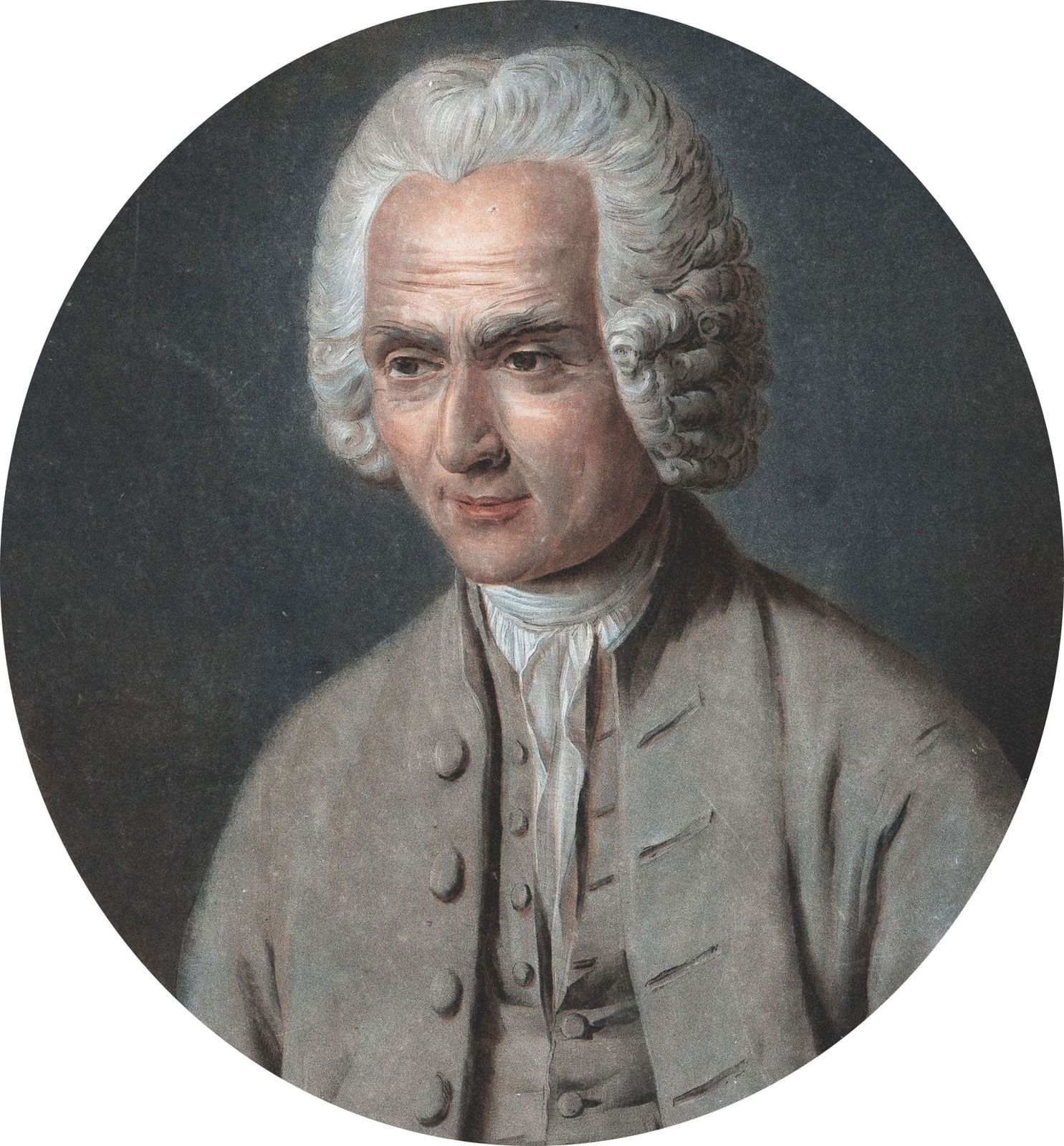
This political treatise eventually earned him exile from Geneva, after which he moved to Paris, a city already crowded with ambitious and frequently aggressive writers and philosophers (who probably specialised in arguing with one another in cafés).
It might be fair to call him another rebellious “troublemaker”, much like his friend slash occasional rival Voltaire.
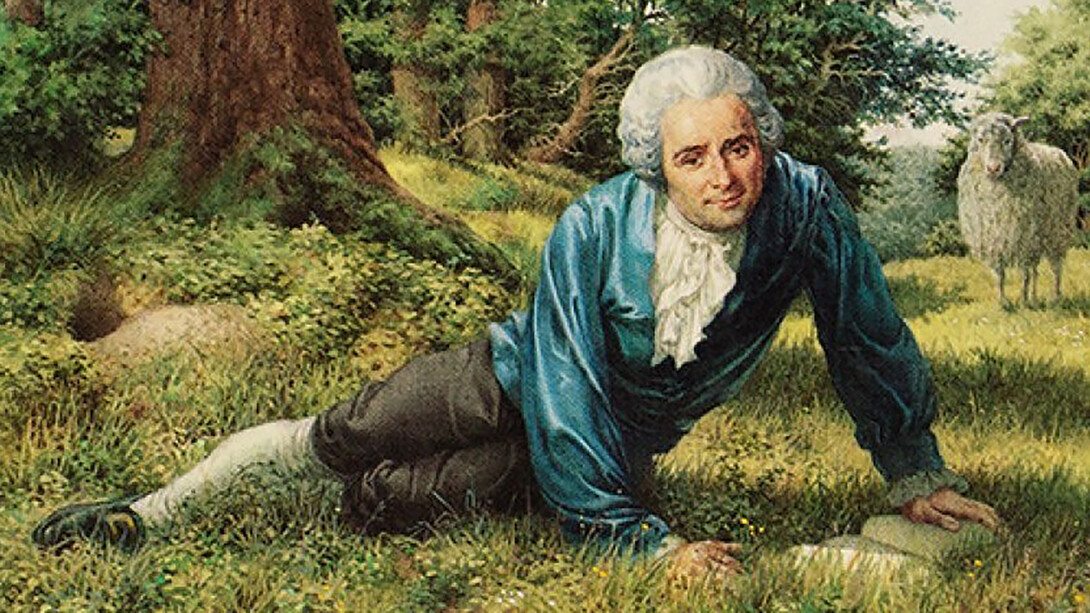
Controversially, while Rousseau was an advocate for parents taking an active role in educating their children, he himself abandoned the child he had with a seamstress (whom he only married after 23 years of sharing a house together).
Was it society’s fault for allowing Rousseau to pursue such “liberty” while committing what many would consider an obvious moral wrong? Because, as we will see in the story of the next philosopher, society was never innocent in constructing, and caging, a writer.
French vocabulary:
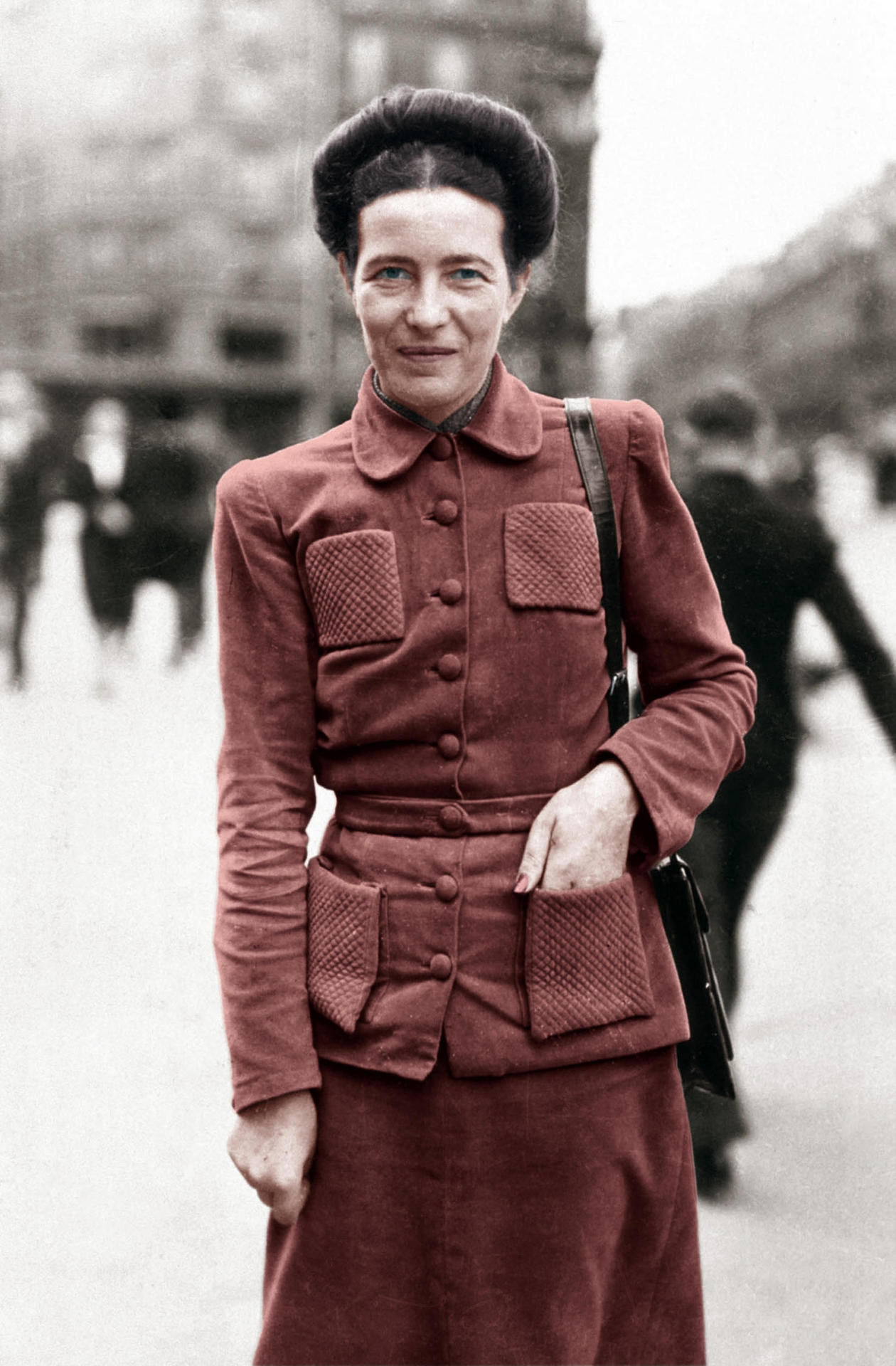
« On ne naît pas femme : on le devient. »
“One is not born, but made, a woman.”
This striking idea, which is pretty much still highly relevant to today’s debates about gender, comes from the renowned work Le Deuxième Sex (“The Second Sex”), which is said to profoundly influence the Second Wave Feminism.
The author behind this cherished work from almost a century ago, was Simone de Beauvoir, one of the most prominent French existentialist philosophers and writers.
Let us travel back to 20th-Century Paris. Then, the academic world, especially the philosophical realm of it, was very much a boys’ club. How a woman managed to complete her studies at a prestigious university without stepping into the grave of marriage was, in itself, a mystery that disturbed Beauvoir’s fellow male contemporaries.
In her lifetime, Beauvoir was known primarily for her literary works and, of course, just like all the other “ordinary” women,
her partnership with Jean-Paul Sartre, whom she met while studying at La Sorbonne. It was not until some time after her death that
she became known as a philosopher and a feminist existentialist whose work continues to shape global feminist ideology today.
Indeed, Beauvoir’s sustained focus on feminism and the ingenious link she made between women and philosophy distinguished her from her male colleagues. At the same time, the publication of her work The Second Sex garnered her both acclaim and notoriety, as it clearly challenged long-standing patriarchal perceptions of gender and the supposedly “natural” gender roles assigned by society.
You will find in her work a central philosophy that highlights a hierarchical structure of gender, in which women are positioned as secondary to men and their roles largely defined by male expectations.
What Beauvoir saw in the world around her was exactly that: men are defined by their actions and women are defined by their relationships with men; just like how society had always viewed her from a romanticised lens brought by her relationship with Sartre, while almost deliberately ignoring and belittling her capability and success as an independent being.
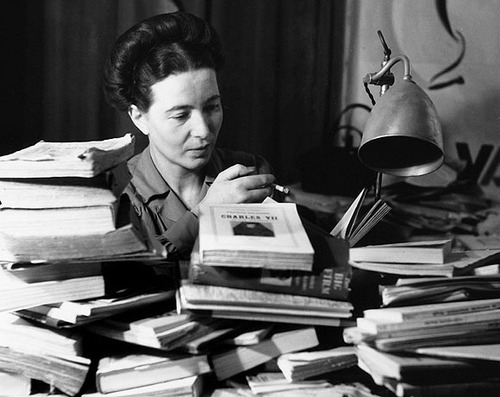
For Danièle Sallenave, author of a new Beauvoir biography, Simone de Beauvoir “showed that women are free to choose their destiny, as much as men, and don’t have to obey what is supposedly dictated to them by nature and convention”.
But would Beauvoir have expected that a century later, such aspirations might still be a privilege for many of us?
French vocabulary:
Hopefully one or two episodes of Suits that you’ve casually watched have made you realise the existence of Separation of Powers within many legal systems around the world, including that of the US and of Australia.
In simple terms, Separation of Powers is a legal structure that divides our government into three independent branches: the Legislature (Parliament), the Executive (government ministers), and the Judiciary (Courts). Each of these powers possesses its own independent and unique authoritative powers, allowing governmental institutions to function while preventing the dangerous concentration of power, and the tyranny that tends to follow it.
This influential governmental system didn’t just come from nowhere; it was firstly proposed and promoted by Montesquieu, a French judge and political philosopher.

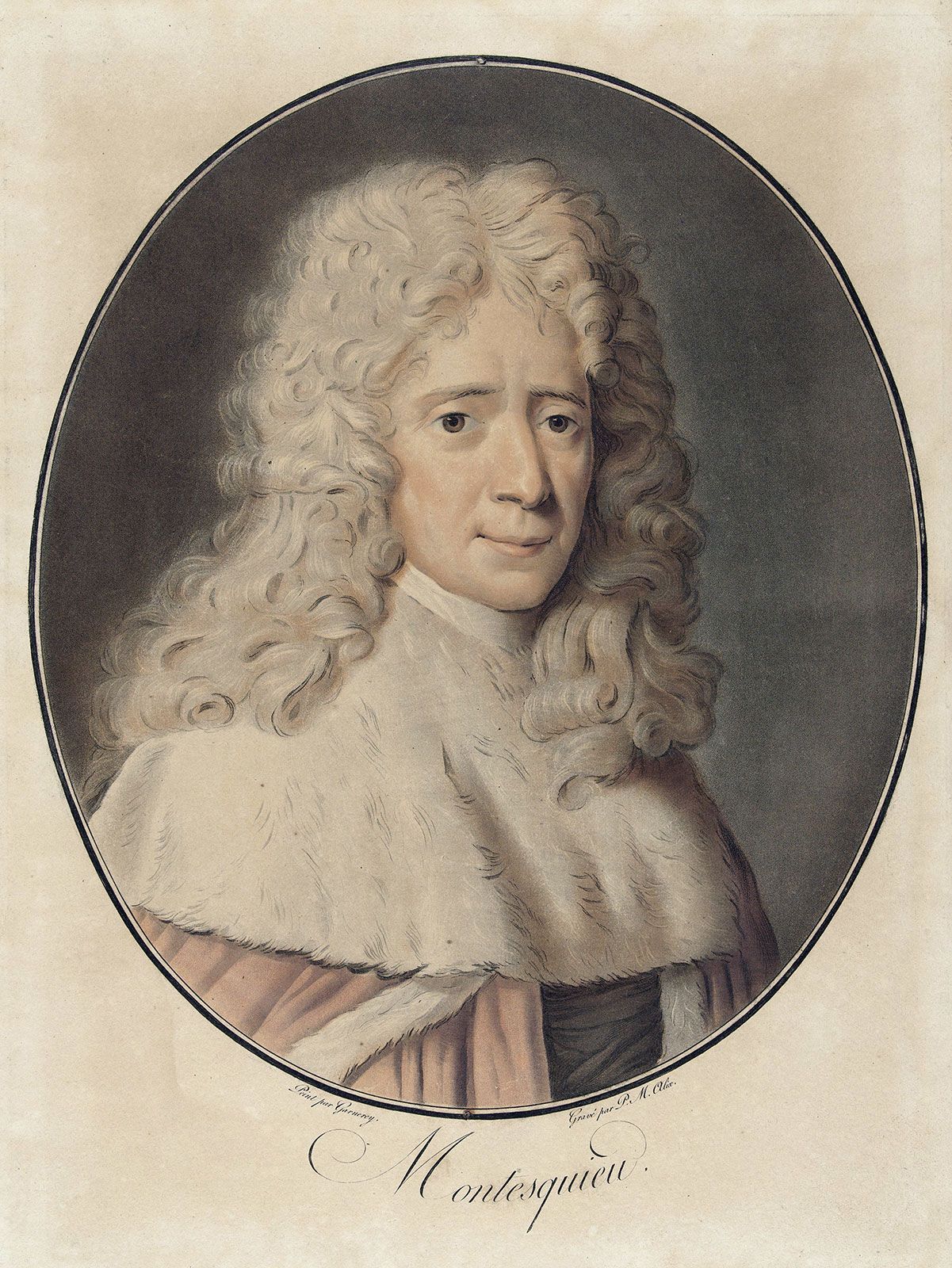
Born into a family of nobility in 1689, Montesquieu first became an advocate after graduating from the University of Bordeaux with a law degree in 1708. Almost twenty years later, in October 1727, he attempted to enter the Académie Française, the French Literary Academy, a highly prestigious institution that works to maintain standards of literary taste and establish the literary language. Montesquieu was successfully elected the next year.
Soon after, however, he decided to leave Paris again to start a grand tour, during which he travelled across Europe at nearly forty years old.
When he returned to France, Montesquieu was once again overflowing with literary ideas and ambition. He began preparing a major work on law and politics, and in the fall of 1748, the world-shaking De l’esprit des loix (“The Spirit of Laws”) was published.
This work is almost universally regarded as “one of the greatest works in the history of political theory and in the history of
jurisprudence”, as its ideas remain, in fact, the founding theories for many modern governments today.
French vocabulary:
From the rebellious wit of Voltaire to the bold ideas of Jean-Jacques Rousseau, Simone de Beauvoir, and Montesquieu, these thinkers brought literary revolutions to our society.
Centuries later, their arguments about freedom, power, and society still shape the world we live in.
Not bad for a group of writers who managed to cause this much trouble with nothing more than a pen, and no fan base the size of Taylor Swift.