France has produced some truly unforgettable leaders and political figures: kings who believed they were chosen by God, revolutionaries who believed they were chosen by justice... In the end, "people" and "power" sit on two sides of a scale, never ever balanced by those with ambitions: an easy simple-choice question, only genuine fools would go for the first option.
"Truth rests with the minority"... who hold the power to dictate reality. Some people are not actually joking when they say "Go big or go home". Worse, when they say "home", what they really mean is the guillotine. On their journey towards power, things could, and did go very wrong for some. But just as some have argued, ambition knows no death. After all, those who risk nothing gain nothing, and those who risk everything... as we will come to see, might as well end up gaining nothing but notoriety.
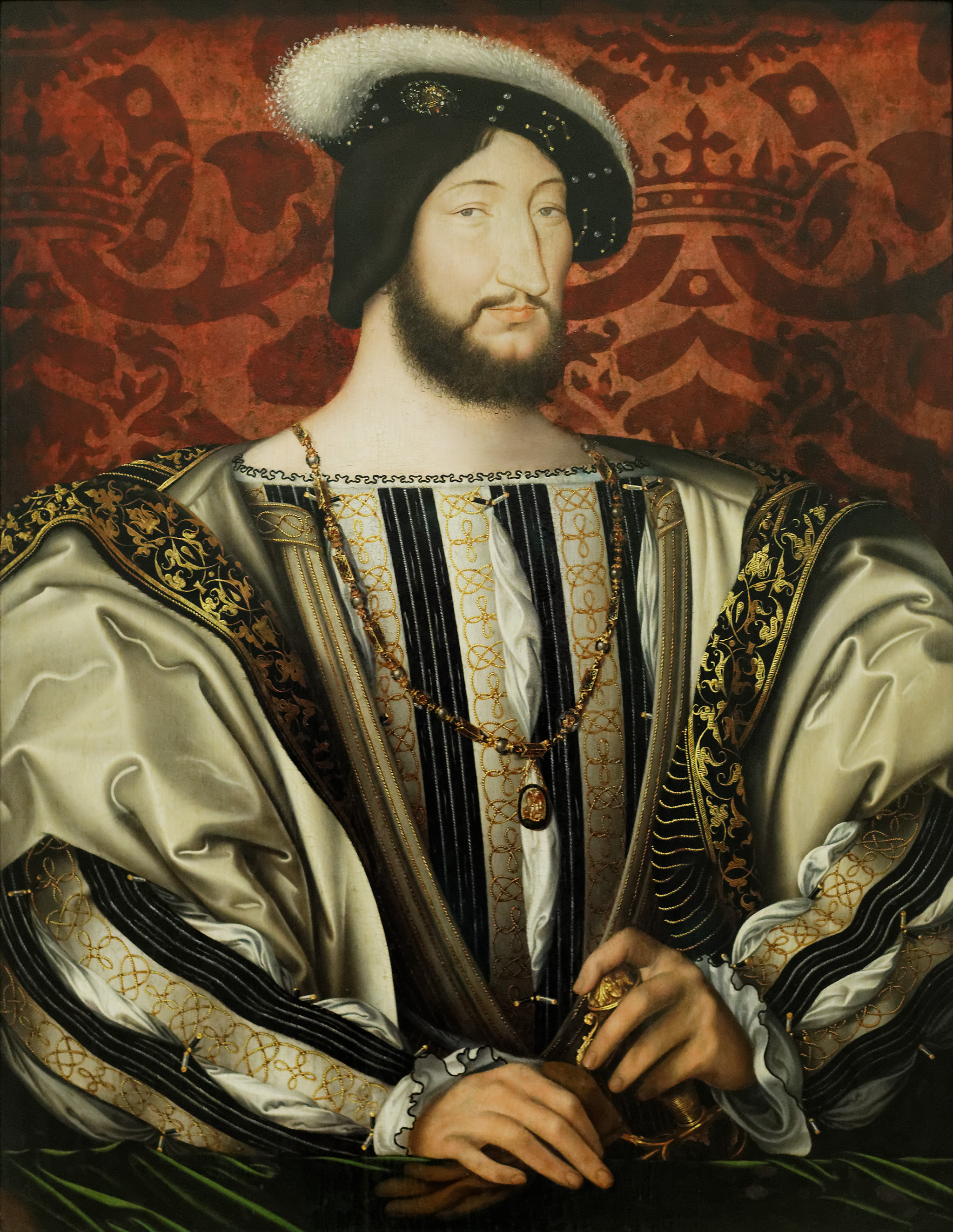
When Francis I was born in 1494, he was never supposed to see the throne of France. His parents were from a minor branch of the royal family and he was the great-great-grandson of King Charles V, whose reign ended nearly a century before Francis’ birth. As such, no one really expected Francis I to rule France, not even himself.
But Francis was lucky enough. The French King at the time, Louis XII, had no male heir, and thanks to the then-apparently sexist French law, the King’s two daughters couldn’t take the throne because of their biological sex. What about Francis, then? Well, good for him, he was right there down the line of succession. All he needed to do was wait. And he did indeed wait, for a long time.
Francis’ childhood was probably accompanied by a mixture of excitement and anxiety. Would Louis XII finally have a son, thus relegating Francis to a minor position in the court? Or, would the King die without a son, leaving Francis to be the King? In 1505, when Louis XII finally fell ill, Francis probably thought he would be relieved from the endless waiting time. However, what he didn’t expect was the big condition that came along with the crown.
At only the age of 11 then, Francis was summoned by the King to marry the King’s eldest daughter Claude, who was only 6. Thank God child marriage is illegal today, because what kind of parent would want to see two primary school kids getting married? Not sure what little Francis and Claude thought about their very premature marriage, but the nobility was clearly against it and had some heated debates. The end result was that the two should only become engaged at this point. At least that was a slightly better outcome than getting married before Year 6.
And lucky for everyone, Louis XII was stronger than people thought he would be. He recovered from his illness, which at least allowed young Francis and Claude to chill for a few more years before living together as man and wife.
It was not until when Francis turned 20 that Louis XII passed away, after marrying Francis to the 15-year-old Claude. Francis thus became the King of France. For him, that was indeed a very long waiting time. Clearly getting to the crown was more time-consuming than getting through to airline customer service when your flight gets cancelled one hour before take-off.
And how was our young king going with his newfound power? Well, the ongoing Italian Renaissance proved to be a great influence on him, and he became a patron of the arts and letters and began grand building projects. He helped the French Renaissance grow by inviting many Italian artists to work for him, including the famous Leonardo da Vinci, who brought THE painting Mona Lisa to France.
During Francis’ time, new ideas like humanism and Protestantism also began to spread. French explorers, like Jacques Cartier, began to explore the New World, claiming lands in the Americas for France, thus starting the first French colonial empire.
It was a prosperous and ambitious time for the kingdom of France, with continuing societal developments and a growing appreciation of arts and humanity. However, Francis was apparently exhausted from ruling the kingdom. When he died on his son’s 28th birthday, it is said that he “died complaining about the weight of a crown”.
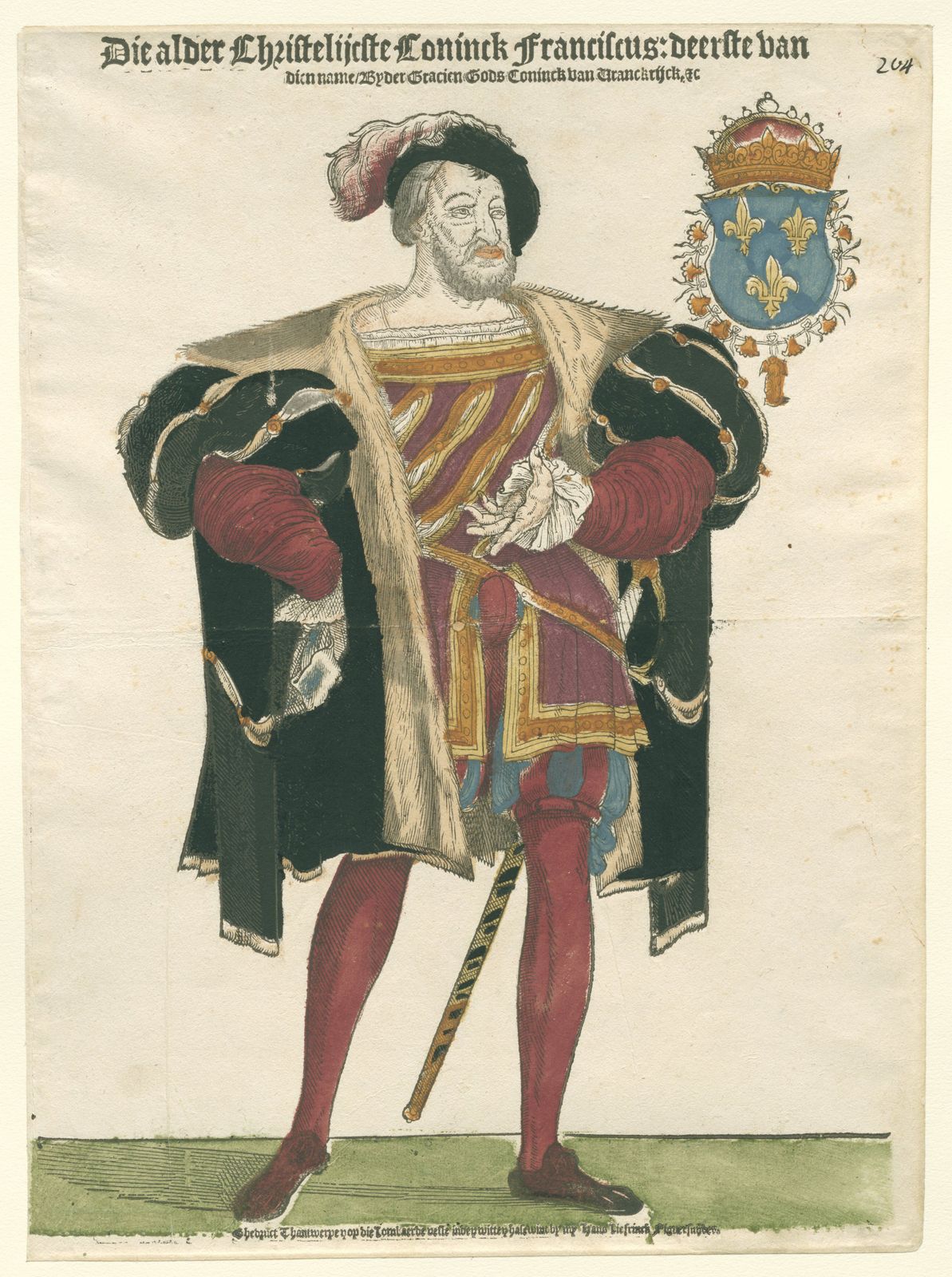
Well, thanks to Maximilien Robespierre, Francis I and his wife’s bodies didn’t rest in peace at all. Their tomb was damaged in 1793 during the French Revolution, and more specifically during the Reign of Terror, a string of public executions allegedly led by this man.
Robespierre was known as « l’Incorruptible », or “the Incorruptible”, for his strict moral rigidity. Indeed, before becoming the architect of the notorious Reign of Terror, he was once a lawyer who advocated for universal suffrage and opposed the death penalty. Quite a plot twist here, like a vegetarian opening a barbecue restaurant.
Born as a son of a lawyer, Robespierre, along with his brother and sisters, was raised by his grandparents following his mother’s death and his father’s departure. He was particularly interested in philosophy and law, and became a lawyer after receiving a law degree.
In his early career, he represented poor people and protested against royal absolutism and arbitrary justice. He was elected secretary of the National Assembly, and presided over the Jacobins, a political club promoting ideas of the French Revolution.
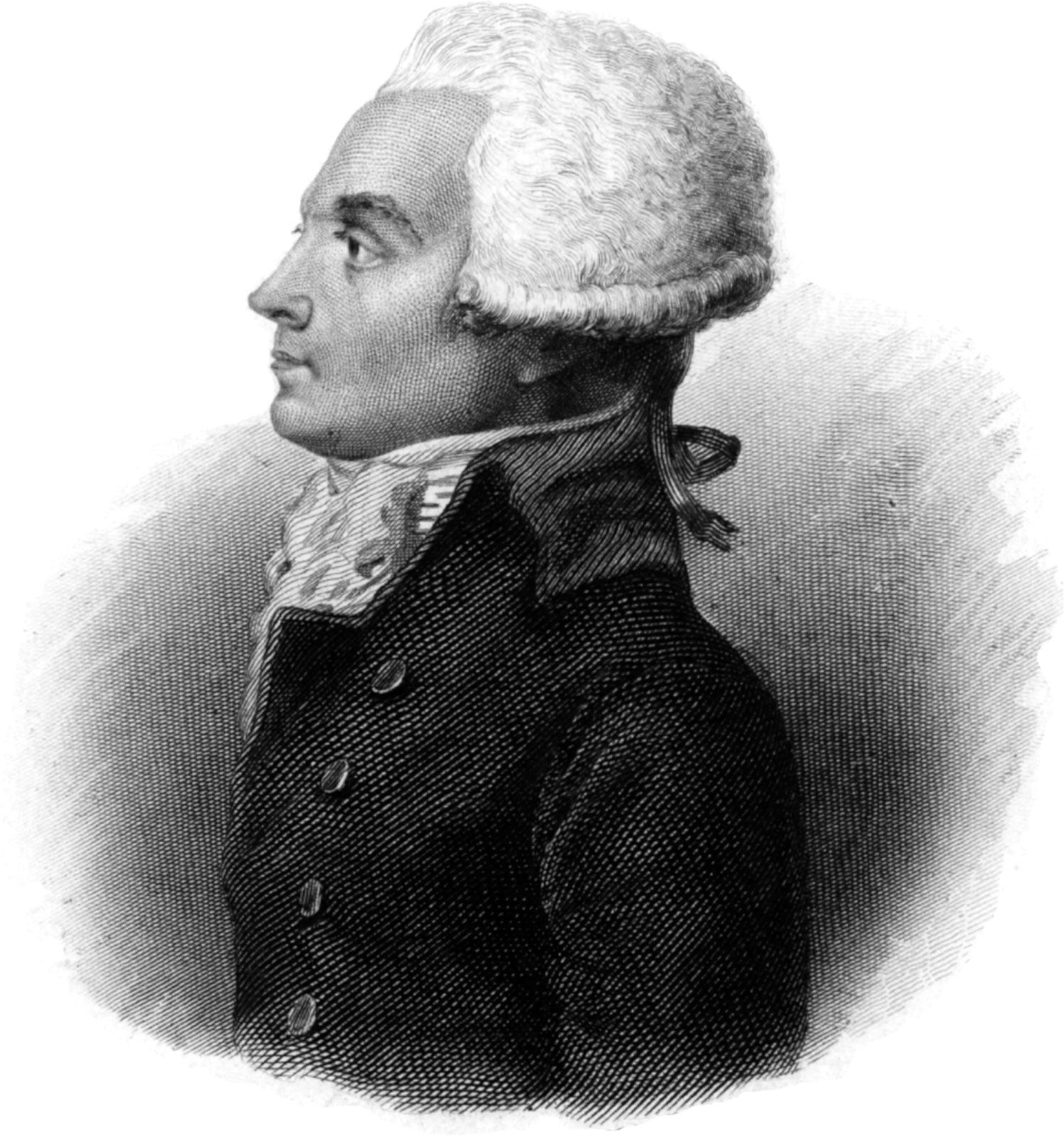
After all, he was pretty much invested in his job in the National Assembly, where the Constitution was being drawn up for the very first time. He defended enslaved people and actively opposed religious and racial discrimination, and, above all else, some very discretionary royal power upheld by the then French King Louis the Great.
Robespierre hated Louis, to the point that he pushed for his execution. After the fall of the monarchy during the Revolution, the fate of Louis as the former king still remained open to debate. He probably wouldn’t have to die had Robespierre not given this very convincing speech: “But if Louis is absolved, if he may be presumed innocent, what becomes of the revolution? If Louis is innocent, all the defenders of liberty become slanderers.”
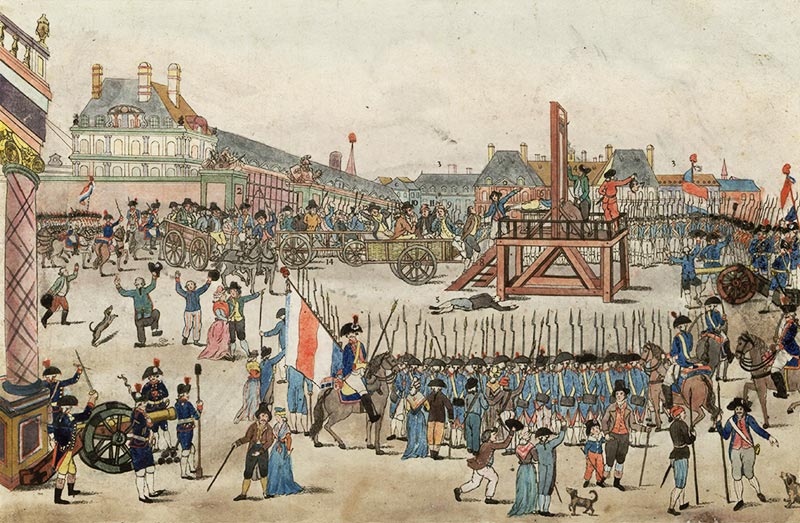
Besides the execution of Louis, Robespierre signed over 500 death warrants as part of his “duty” to rid France of anyone not actively defending the new republic. He thus led the notorious Reign of Terror as the head of the Committee of Public Safety, a newly-formed principal organ of the Revolutionary government, tasked with the protection of the new republic from both foreign and domestic enemies, vested with wide legislative powers.
However, only one year after the formation of the Committee, Robespierre was overthrown and executed. In the end, the revolution really did eat its own children. And Robespierre ended up on the menu. Had he gotten enough of a taste of power? That’s something we will never know.

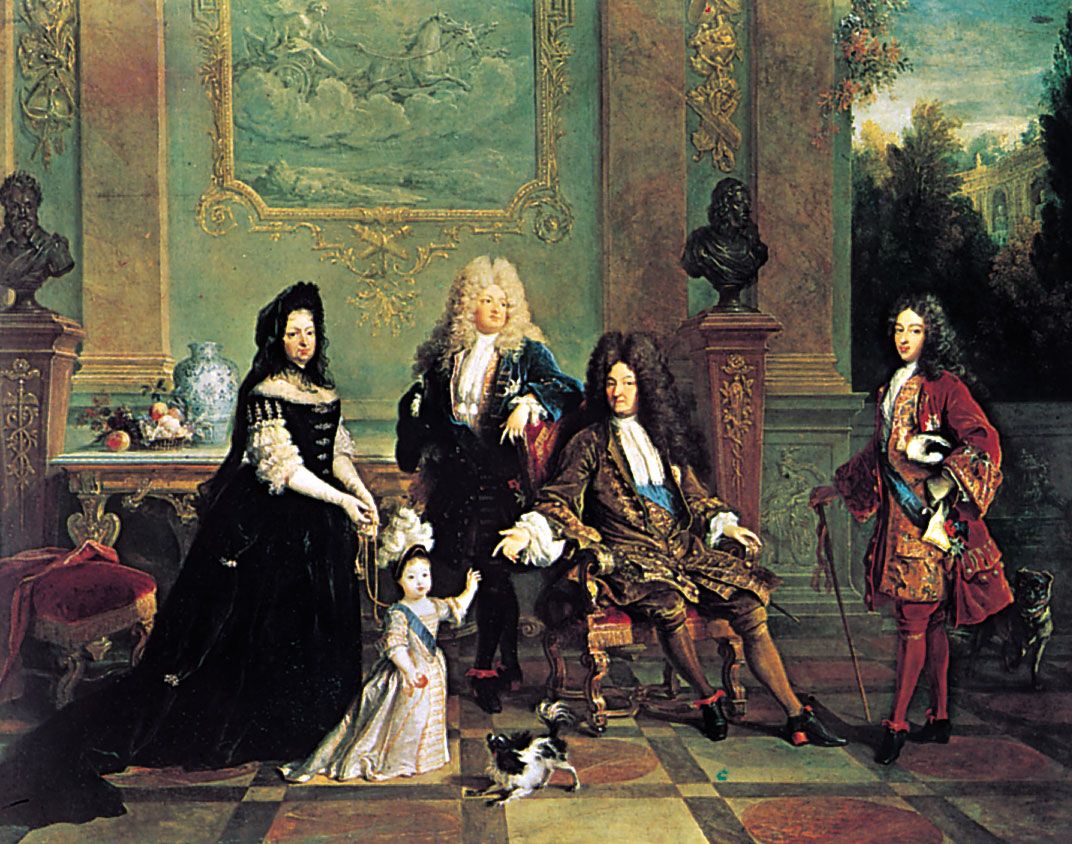
The poor Louis XIV, who was executed thanks to the efforts of Robespierre. But was he ever innocent? Probably not. Robespierre fought so much for a revolution for a reason: under Louis’ rule, France was marked by absolute monarchy. The King had power over anyone, anything. Not even God could come in his way, because Louis truly believed himself to be a representative of God, “a visible divinity”. Clearly, subtlety had already left the chat.
Louis didn’t enjoy much of his childhood. When he was 9, the nobles and the Paris Parlement rose against the crown, marking the beginning of the long civil war known as the Fronde. Louis endured many things as a once prestigious royal child: poverty, misfortune, fear, humiliation, cold, and hunger. Paris became a symbol of suffering, and he never returned, not even as King.
Probably inspired by this tragic experience, Louis was indeed thirsty for power, for which he could give up his own life. He wrote in his Mémoires: “In my heart I prefer fame above all else, even life itself…”
“It was the best of times, it was the worst of times”. With Louis remaining in power, France’s territory expanded alongside an economic revolution that maximised exports. The kingdom was undoubtedly powerful, prosperous, and magnificent. In the words of Voltaire, it was “an eternally memorable age”.
At the same time, power became a synonym of “uniqueness”, meaning it could only be held in the very own hands of the King himself. The monarchy became increasingly isolated from the people and thereby assumed a decidedly mythical quality.
“Sharing is caring” would be a personal attack to Louis, as he informed his astonished ministers that he intended to assume all responsibility for ruling the kingdom, according to his very own concept of a dictatorship by divine right. He believed himself to be God’s representative on earth, such that all disobedience and rebellion were sinful.
In expanding the territory, his armies committed atrocities. The kingdom itself was associated with slavery, mass deportations, and genocide.
The celebrated Versailles was built, while Louis made the whole government bear its construction costs, costing approximately the price of a modern airport. Behind this impressively aesthetic and luxurious hotspot just for the nobility were the work of over 35,000 workers for 40 years, all just to help Louis responding to his childhood trauma. In the end, he did manage to get the sickest palace of all time away from Paris. Instead of “go home”, Louis chose to “go big”. Except that he made others doing the work for him.
Just as the world revolved around the sun, France revolved around Louis. That’s why he was called The Sun King. People went crazy trying to impress him. One chef, Vatel, even stabbed himself through the heart when he delivered a dish late. Deadline really had its true meaning there.
During Louis’ time, France virtually told the tale of two cities: while him and the privileged saw a “spring of hope”, for many others including Robespierre, it was “the winter of despair”, cruel enough for an even crueller revolution.
There is no doubt that Napoleon was, indeed, very ambitious.
From the very beginning, he pictured himself to be the new Charlemagne, the man who managed to take control of almost the whole of Europe. Not only did Napoleon once declare himself to be just like Charlemagne, he also crowned himself with a replica of Charlemagne's crown at his coronation to become France's emperor in Notre Dame de Paris.
Born on the island of Corsica to a family of Italian origin, Napoleon didn't even speak French when he was a kid. He only spoke Corsican and Italian when he moved to mainland France at the age of nine. While he eventually became fluent in French, he spoke it with a strong Corsican accent and had very poor French spelling.
His accent really just made school life tough for him. When he transferred to the military academy at Brienne-le-Château, he continued to be routinely bullied by his peers, among many other things (such as his short stature), for his poor French.
Although he later went on to lead the French Empire, Napoleon more readily identified himself as a Corsican. In his early career, he even fought fervently for Corsican independence. However, after a falling out with Corsican resistance leader Pasquale Paoli, Napoleon realised that France was probably a better starting point for his ambitious political blueprint. He made France his home, and began to establish himself as the republic’s new rising star by masterminding a succession of vital military victories, including the resistance-breaking Siege of Toulon and, in 1785, the defeat of 20,000 royalists in Paris.
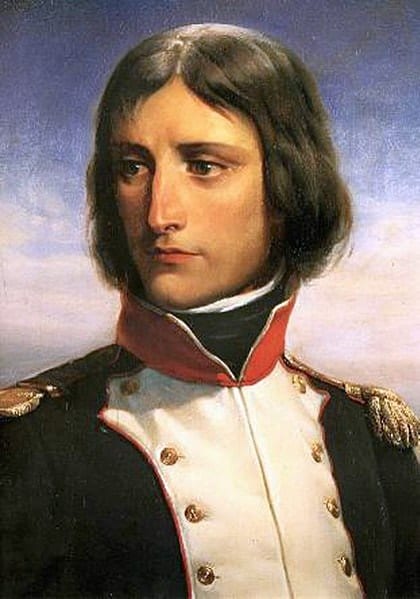
Republican politicians saw potential in Napoleon and regarded him as a natural leader. He became the head of the government following numerous battlefield victories in Italy and Egypt. Then in 1799, he seized power of France and became the First Consul, overseeing continued military dominance and instituting influential legal reforms.
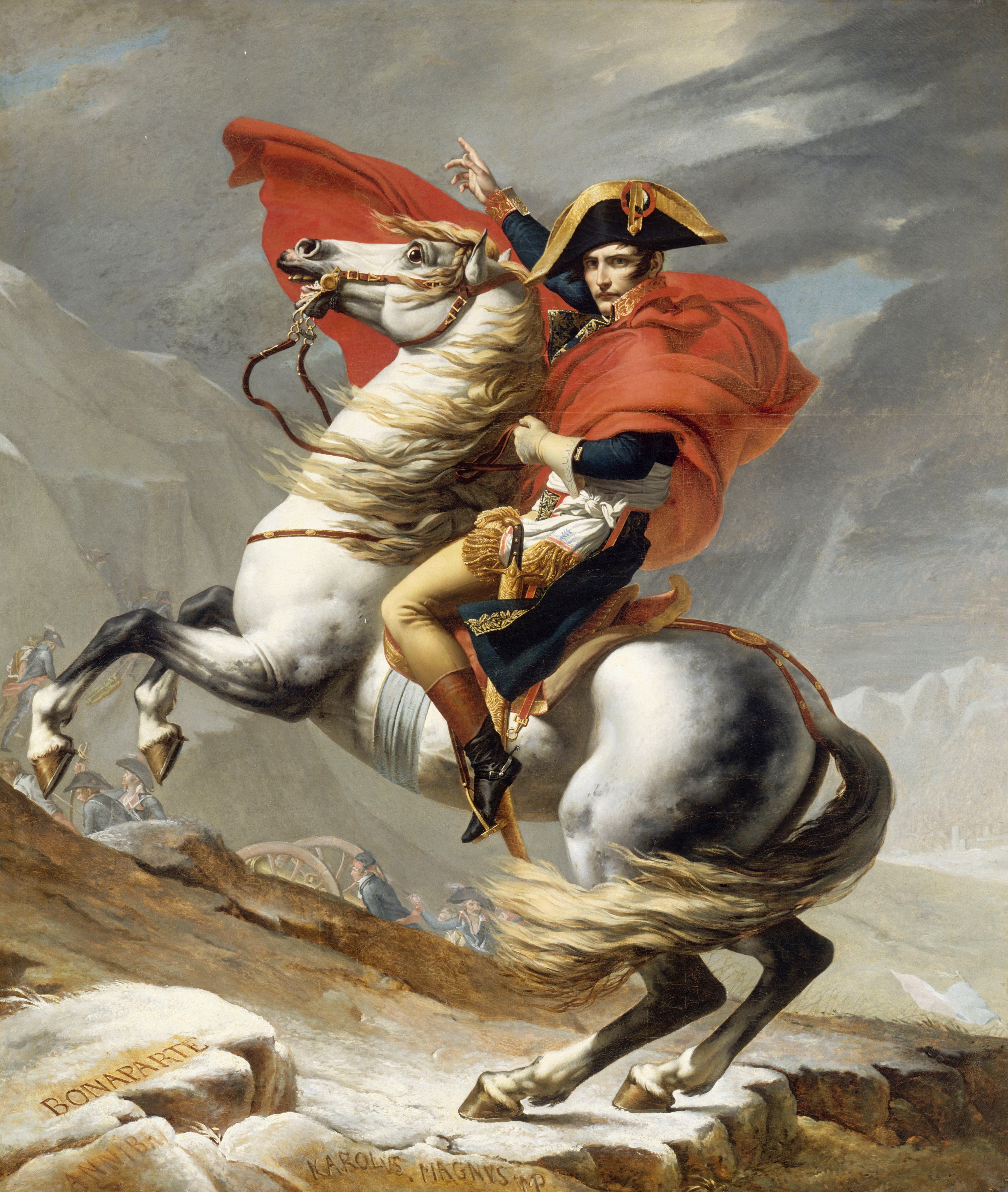
Commentators have divergent views on whether Napoleon's ambition was mostly for his own power and glory or for the welfare of France.
However, by all means, he was an inspiring leader. Arthur Wellesley, First Duke of Wellington, said that Napoleon’s presence on the battlefield was worth 40,000 soldiers.
Others criticise Napoleon’s volatile temper. He was very likeable and could charm people easily when he needed to. However, he could also publicly humiliate others and was known for his rages when his plans were frustrated.
Napoleon didn’t really get to enjoy much of his really get to enjoy much of his later years when he was forced to “retire” from running the French Empire. The British decided to send him to detention in a far-off island, St. Helena, an extremely remote location that took Napoleon ten weeks at sea to arrive at. He stayed in the Longwood House, a property said to have been particularly cold, uninviting, and infested with rats.
Only six years after his exile, Napoleon quietly passed away on the island of St. Helena.
From an unpopular school boy to an admired military leader, from an emperor to a prisoner… Napoleon definitely paid the price for being over-ambitious. Perhaps it was all worth it for him? But that is something we will never know.
French vocabulary:
Power in France has rarely been quiet or uncomplicated. Behind the crowns, revolutions, and political ideas were ambitions, ambitions, and, still more ambitions. These leaders shaped France through glory, violence, reform, and ego on a spectacular scale. What bothered them was certainly not an "all or nothing" situation in which one step could lead to the guillotine. What they feared much more than dying, was probably dying anonymously.