If you talk about Charlemagne you have to talk about Napoleon: another brilliant military tactician and a hugely influential statesman, once a French emperor but who died on an isolated island after being exiled.
The price for being ambitious came quickly for Napoleon, and he definitely paid for it. No refunds, no exchanges.
People know Napoleon Bonaparte for his status as one of history’s greatest leaders, or sometimes for his diminutive stature. What is less known, however, is his almost fanboy-level admiration for Charlemagne, the man who almost conquered the whole of Europe.
Not only did Napoleon once declare himself to be just like Charlemagne, he also crowned himself with a replica of Charlemagne’s crown at his coronation to become France’s emperor in Notre Dame de Paris.
If fanfiction was a thing at the time, Napoleon would probably have written one about Charlemagne. This is highly possible given Napoleon’s passion for writing. He had once even written a romance novella, although it received pretty bad reviews.
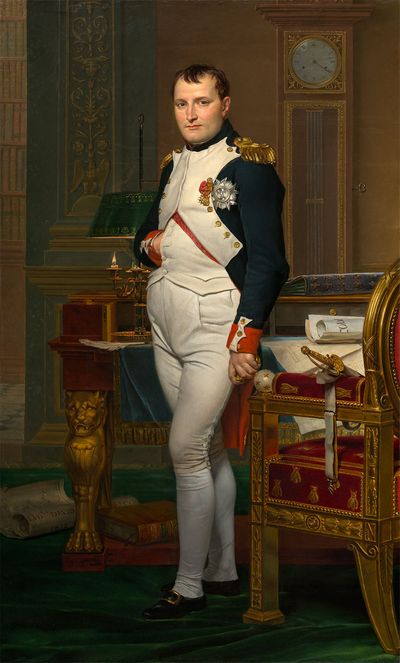

Perhaps one of the few things in common between the two rulers was that they both struggled with learning at some point. While Charlemagne couldn’t write, Napoleon had always struggled with languages.
French was not Napoleon’s mother tongue, and he struggled with it throughout his entire childhood.
Born on the island of Corsica to a family of Italian origin, Napoleon only spoke Corsican and Italian when he moved to mainland France at the age of nine. He eventually became fluent in French.
However, he spoke it with a strong Corsican accent and had very poor French spelling. When he transferred to the military academy at Brienne-le-Château, he continued to be routinely bullied by his peers, among many other things (such as his short stature), for his poor French.
Although he later went on to lead the French Empire, Napoleon more readily identified himself as a Corsican. In his early career, he even fought fervently for Corsican independence.
However, after a falling out with Corsican resistance leader Pasquale Paoli, Napoleon realised that France was probably a better starting point for his ambitious political blueprint. He made France his home, and began to establish himself as the republic’s new rising star by masterminding a succession of vital military victories, including the resistance-breaking Siege of Toulon and, in 1785, the defeat of 20,000 royalists in Paris.
Republican politicians saw potential in Napoleon and regarded him as a natural leader. He became the head of the government following numerous battlefield victories in Italy and Egypt. Then in 1799, he seized power of France and became the First Consul, overseeing continued military dominance and instituting influential legal reforms.
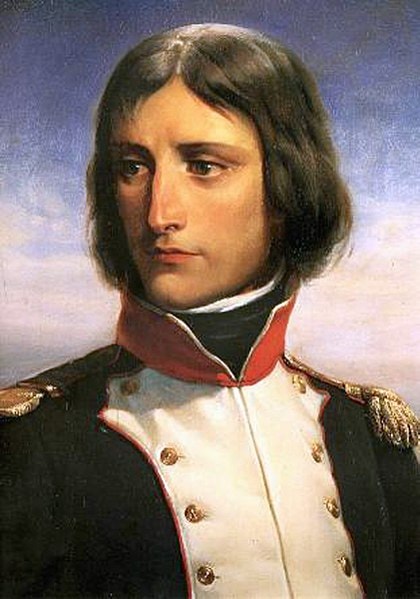
There is no doubt that Napoleon was, indeed, very ambitious. However, commentators have divergent views on whether his ambition was mostly for his own power and glory or for the welfare of France.
By all means, Napoleon was an inspiring leader. Arthur Wellesley, First Duke of Wellington, said that Napoleon’s presence on the battlefield was worth 40,000 soldiers.
Others criticise Napoleon’s volatile temper. He was very likeable and could charm people easily when he needed to. However, he could also publicly humiliate others and was known for his rages when his plans were frustrated.
Some historians also see the man as a misogynist, with a cruel streak which he often inflicted on women, children and animals. While Napoleon implemented a famous new set of laws, known as the Napoleonic Code, under these laws women lost most of their new rights that they only just gained from the French Revolution. For instance, the law treated women like minors, while male heads of families could have full control over their wives and children.
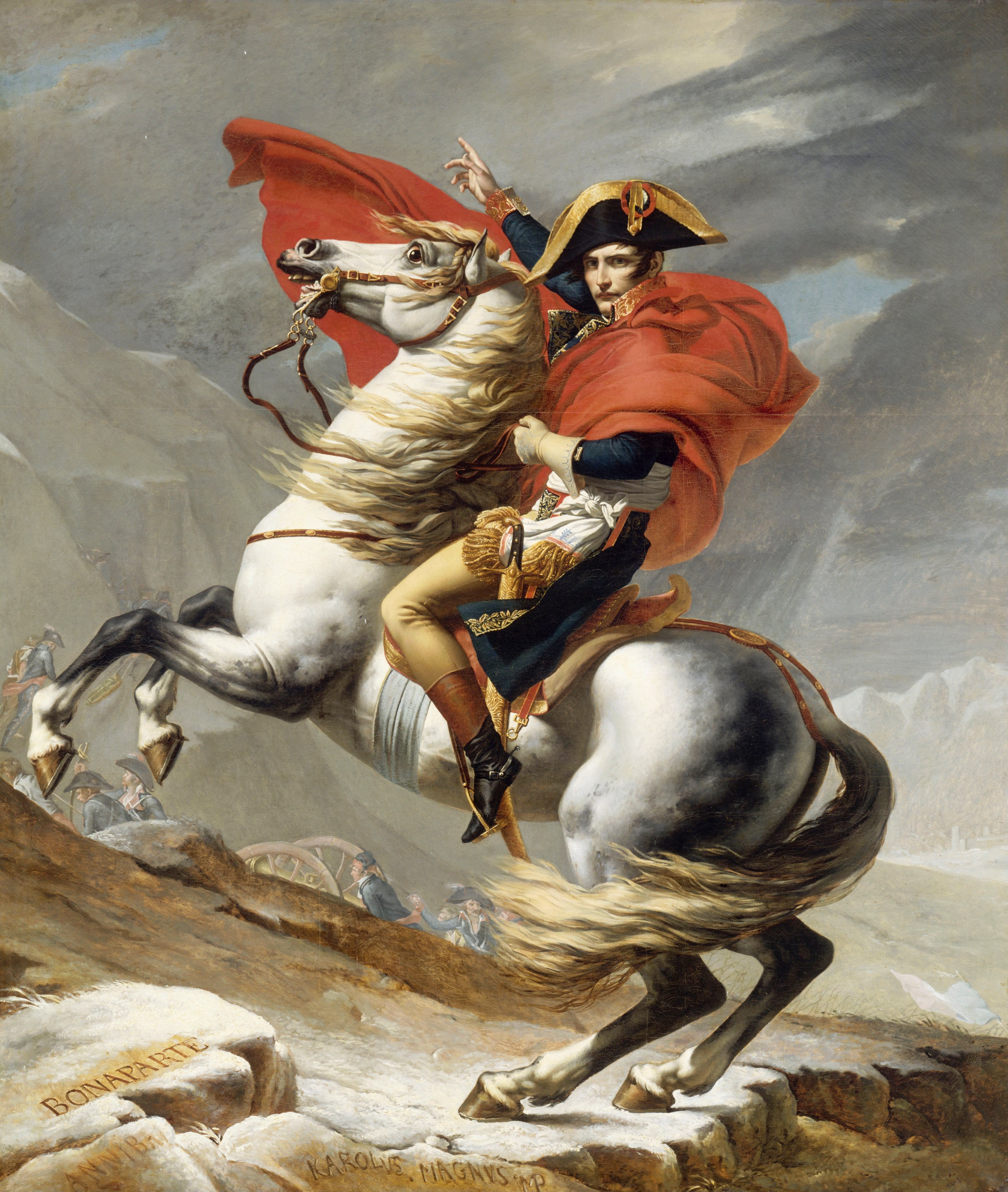
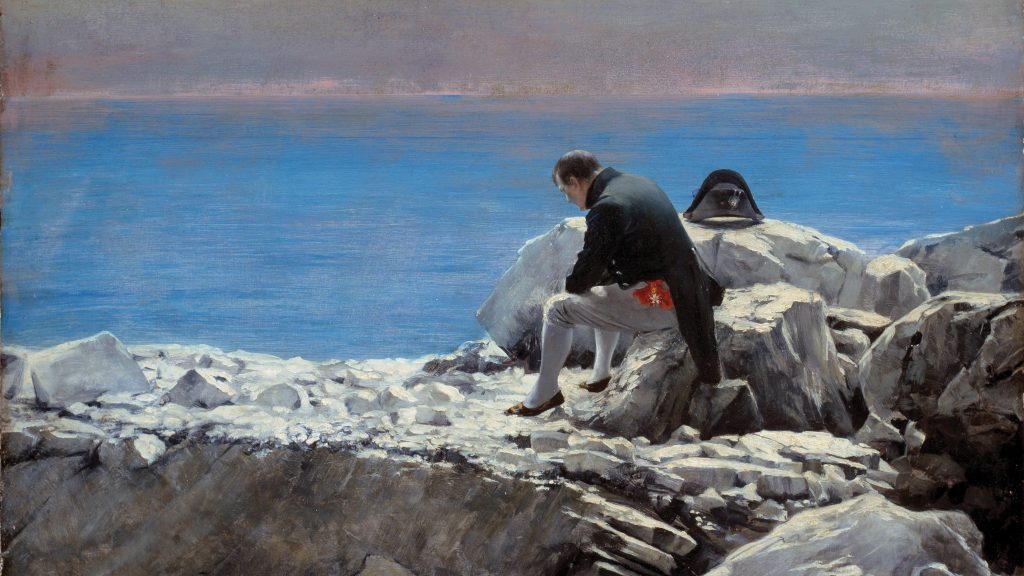
Napoleon didn’t really get to enjoy much of his later years when he was forced to “retire” from running the French Empire. The British decided to send him to detention in a far-off island, St. Helena, an extremely remote location that took Napoleon ten weeks at sea to arrive at. He stayed in the Longwood House, a property said to have been particularly cold, uninviting, and infested with rats.
In his later years, Napoleon gained weight and had a sallow complexion. Novelist Paul de Kock, who met him in 1811, described Napoleon as “yellow, obese, and bloated”.
In the apparently poorly-equipped Longwood House, Napoleon also tried to pick up English. However, he quickly gave up after a few months as he was poor at languages.
Only six years after his exile, Napoleon quietly passed away on the island of St. Helena.
French vocabulary:
From an unpopular school boy to an admired military leader, from an emperor to a prisoner… What a crazy life to live, way more dramatic and unrealistic than the Emily in Paris plot.
Napoleon definitely paid the price for being over-ambitious. Perhaps it was all worth it for him? While, that is something we will never know.