Back in the time when international law was not a thing, when rulers killed and conquered to make themselves comfortable, wars could mean a lot of things. Victory brought expansion, wealth, and glory, for the brilliant leaders of course, whereas us citizens suffered in fear.
To Charlemagne, conquering almost the whole of Europe didn't seem like a big deal. He battled hard, almost always won and rarely lost. Wherever he stepped foot, there were people cheering and, of course, people moaning. Conflicts were only a single-edged sword, with Charlemagne holding it from beginning to end.
Needless to say, this "father of Europe" remains controversial even today. Was he famous? Or was he more like......notorious? Each side has its say, and you will probably have yours soon as well.
Charlemagne, a.k.a. Charles the Great, King of the Franks and Roman Emperor, a legendary military leader who united much of the continent of Europe for the first time since the fall of Rome, a ruler who built an empire that lasted more than a millennium……
To many, he remains the “father of Europe” who, almost single-handedly, expanded the territory inherited from his father (Pepin the Short) to stretch over more than a million square kilometres, from the Ebro to the Elbe, from the Netherlands to Provence.
Others see something darker, however, and question how his version of the “European Union” was built upon extremely brutal forces against its inhabitants.
Most notoriously, he is said to have ordered the execution of around 4500 Saxons, putting to death any members of the pagan Germanic tribe who didn’t convert to Christianity. Some one thousand years later, this massacre became used by Nazi propagandas which framed Charlemagne as an enemy of traditional Germanic culture and an example of the evils of the Catholic Church.
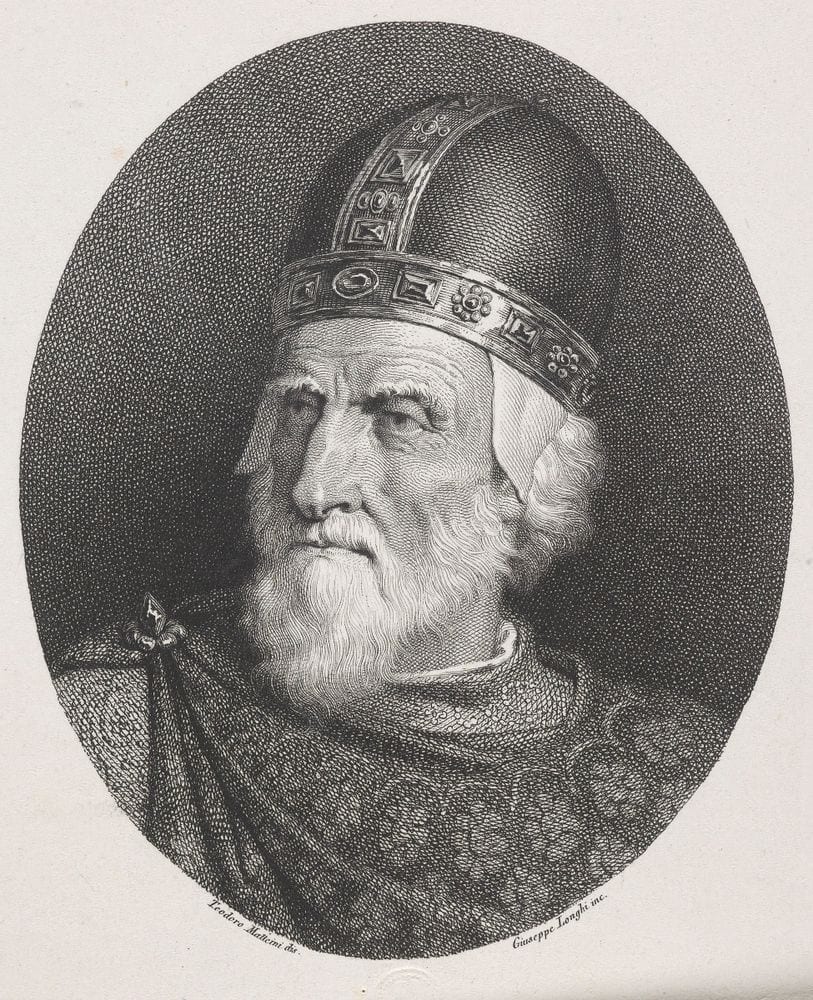
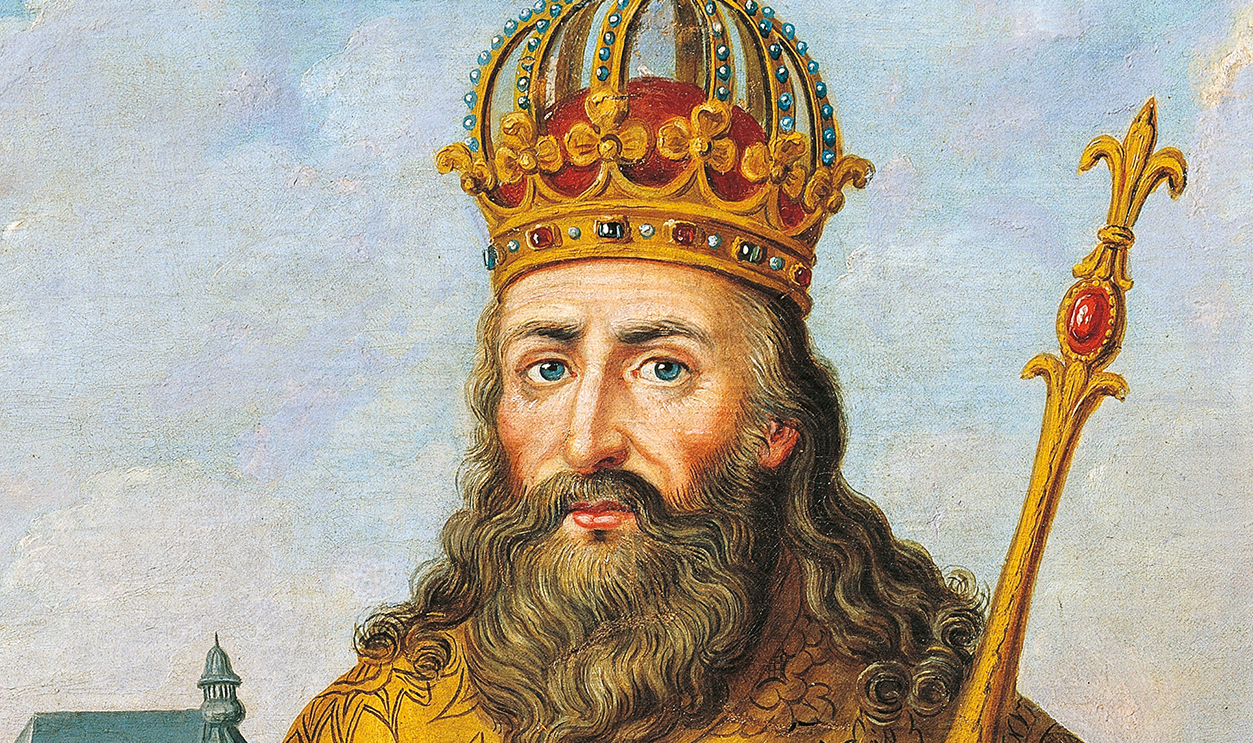
Charlemagne’s story has always been left open to interpretations: he remains to be a remote figure, with no contemporary portrait of him survives, and the absence of written correspondence makes it hard for us to guess his thoughts and feelings.
Was Charlemagne ambitious?
Was he brave, violent, power-addicted, or was he just simply thirsty for others’ admiration and the thrill of conquer and control?
Because how else would you explain his crazily-complicated relationship history, how he was married to 5 different women, had
affairs with countless mistresses, and fathered around 18 children?
Sure, he wasn’t necessarily bad-looking: an athletic swimmer, broad ad strong-bodied, and unusually tall at well over six feet.
And maybe, putting aside all the controversial things he did, he was a god leader who valued intellectuals, even though he himself couldn’t possibly write.
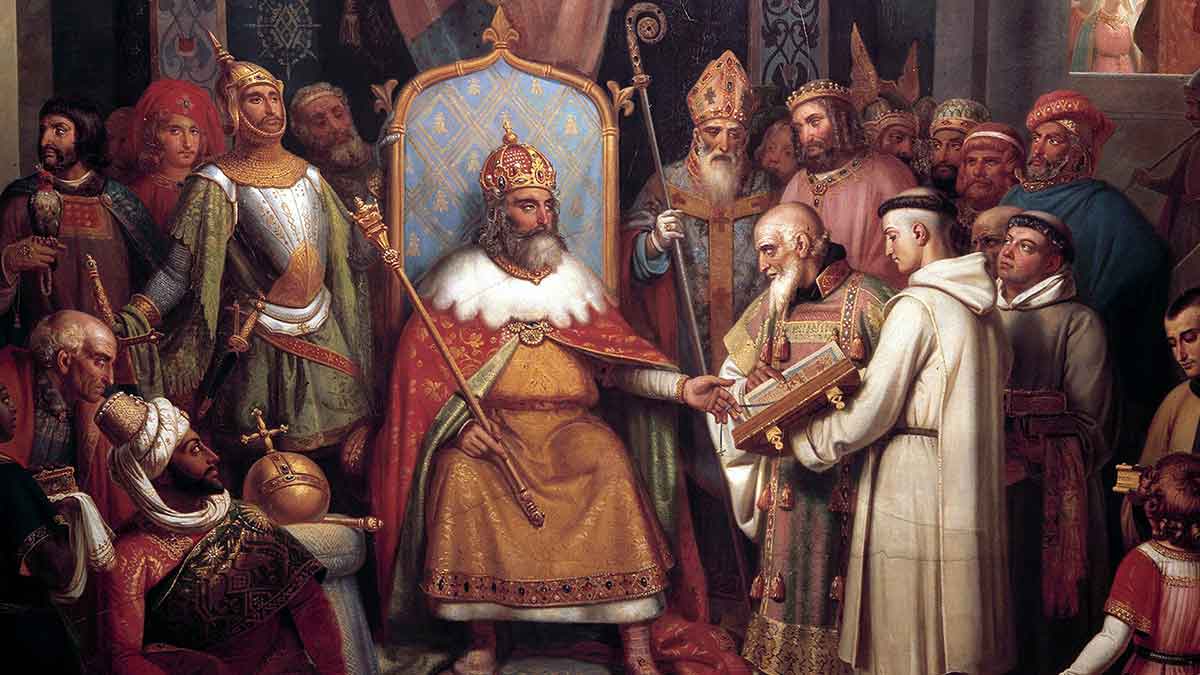
He enthusiastically promoted arts and education in his kingdom, as well as agriculture, commerce, and manufacturing.
He encouraged academics to come to his court, set up schools to revive learning, introduced important legal reforms (such as replacing the absurd trial of ordeal by a process that more closely resembles today’s trial by jury), and even standardised currency and weights, measures and customs dues.
Many also see him as a good father. But that remains questionable. While he supported the education of both his sons and daughters, he
didn’t allow any of the girls to get married during his lifetime. It would clearly be naïve to think of this as an act of love and
protection. Charlemagne probably just didn’t wish to elevate the status of his sons-in-law's families too much for his comfort.

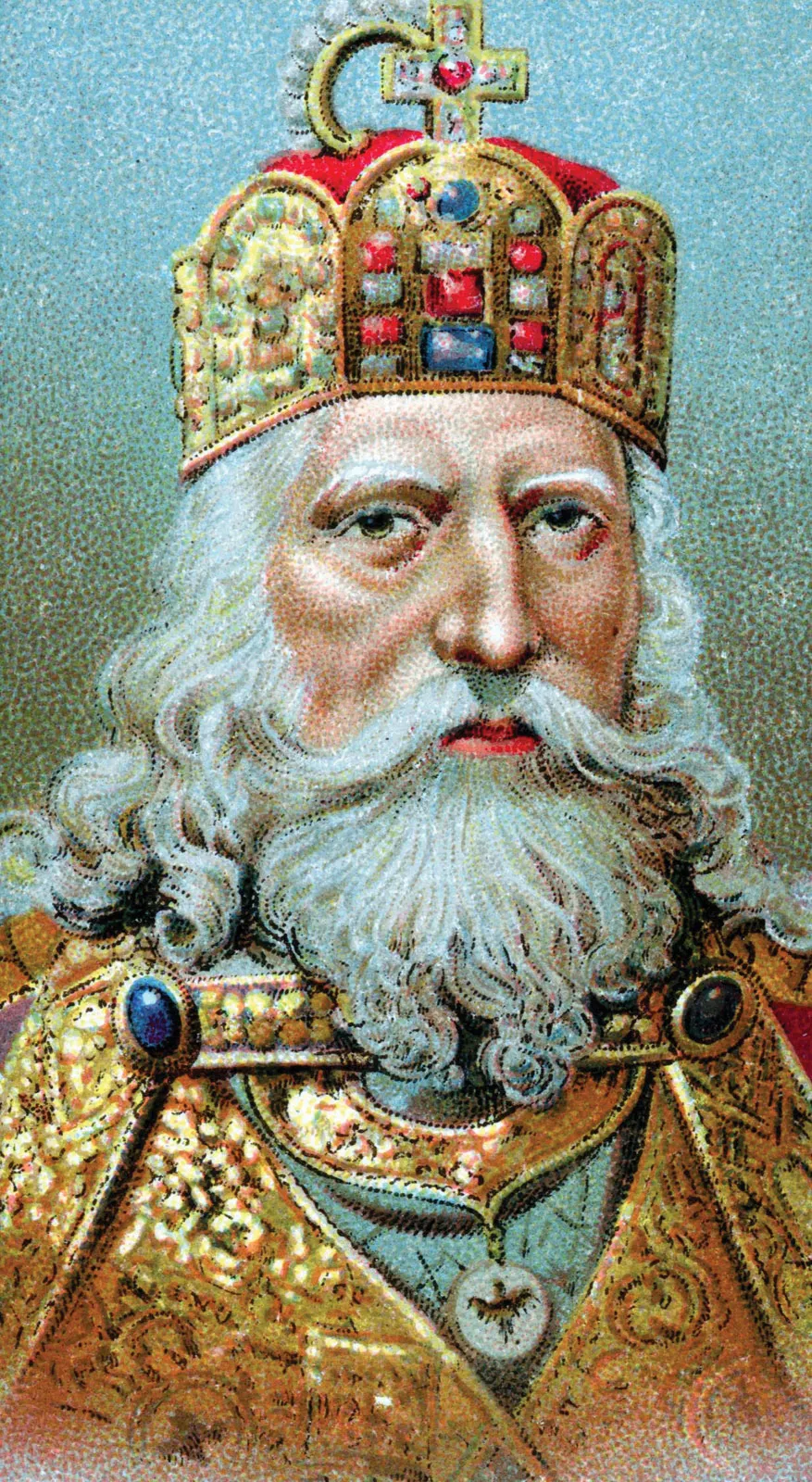
Charlemagne’s given name, Karl in German, is derived from a word in the language meaning “free man”.
The real question, then, becomes, was this name a bless or a curse?
Because was Charlemagne ever truly free? Free from the compulsion of power, ambition, free from the need to battle, conquer, and risk his life or someone else’s?
By all means, variants of the name Karl in other languages no longer stands for an ordinary name. From Czech to Polish, Karl
has come to mean “king”, probably making Charlemagne a king more than anyone, from inside out.
When Charlemagne passed away at the age of 71, his death marked pretty much the end of his empire, which collapsed less than a century after. Yet his name and story remain to be remembered by many, including Napoleon Bonaparte, who wanted to be Charlemagne so bad and declared, nearly a thousand years after Charlemagne's death, that
« Je suis Charlemagne »
“I am Charlemagne”
French vocabulary:
"I came, I saw, I conquered". Victory seemed just this easy according to Julius Caesar, who spoke of wars as if they were some single-player games that he would casually play against the computer.
800 years later, after the fall of Rome, another man emerged, conquered almost the whole of Europe, and even became the new emperor of Rome.
Of course Charlemagne had lost his battles, several times, but he never considered himself a loser. After all, the battle fields were just like his playgrounds. And all you need to do to join the game is rise, and rise again.